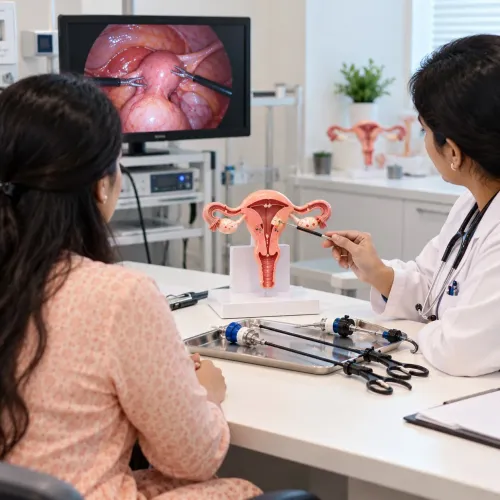

Choosing menopause care depends on the symptom you want to treat, your age, menstrual pattern, medical history and whether you still have a uterus. By the end, you will know which treatments address hot flushes, vaginal and urinary symptoms, sleep and mood concerns, and what to ask before starting any medicine.
Key takeaways
- Menopause is confirmed after 12 months without periods in women aged 45 or older.
- Match treatment to the symptom, such as vaginal oestrogen for vaginal dryness.
- Review hormone therapy risks, benefits, and contraindications before starting.
- Arrange follow-up in Thane to adjust treatment as symptoms and health change.
How do clinicians identify perimenopause, menopause and postmenopause?
Perimenopause is the transition before menopause: periods become irregular, lighter or heavier, and symptoms such as hot flushes or sleep changes can begin. Menopause confirmation is retrospective: in a woman aged 45 or older who is not using hormonal contraception, clinicians confirm it after 12 consecutive months without menstruation. Postmenopause follows that point.
| Stage | How clinicians identify it | Practical implication |
|---|---|---|
| Perimenopause | Irregular cycles, changing flow and related symptoms | Pregnancy remains possible; use contraception until menopause is established according to age and clinical circumstances |
| Menopause | 12 consecutive months without menstruation, assessed retrospectively | The date of the final period marks the transition |
| Postmenopause | The period after confirmed menopause | Any new vaginal bleeding needs assessment |
For otherwise healthy women aged 45 or older, clinicians usually use menstrual history and symptoms rather than a routine hormone panel. An FSH test for menopause is mainly useful when menopause is suspected before age 45, especially before age 40, or when the diagnosis remains uncertain.
A search for menopause blood tests Thane should lead to targeted testing, not a broad panel. Take a pregnancy test when pregnancy is possible, request thyroid testing for palpitations, fatigue or unexplained weight change, and obtain a complete blood count when heavy or prolonged bleeding raises concern about anaemia.
Bleeding after menopause is never a normal symptom: even one episode may require transvaginal ultrasound, endometrial sampling or hysteroscopy.
Which treatment matches each menopause symptom?
The right menopause treatment options depend on where symptoms occur and how severely they affect you, not simply on whether a product says “menopause”. No single option treats every symptom.
| Option | Best match | Key point |
|---|---|---|
| Menopausal hormone therapy | Frequent hot flushes and night sweats | The most effective hot flush treatment when medically suitable; systemic treatment acts throughout the body. |
| Menopause-specific cognitive behavioural therapy | Hot flushes, poor sleep and depressive symptoms linked with menopause | A structured therapy that can complement hormone therapy or provide an alternative. |
| Low-dose vaginal oestrogen | Vaginal dryness, burning, painful sex and urinary discomfort | Local treatment has much lower systemic absorption than systemic therapy. |
| Vaginal moisturiser | Ongoing vaginal dryness | Apply regularly, not only during sexual activity. |
| Lubricant | Friction or pain during sexual activity | Use during sex; choose a product compatible with condoms if needed. |
| Pelvic-floor physiotherapy | Leakage, pelvic-floor weakness, painful sex or muscle overactivity | Assessment identifies whether strengthening, relaxation or both are needed. |
Lifestyle measures support every plan: do regular aerobic and resistance exercise, include practical weight-bearing activity, eat adequate protein and calcium-rich foods, stop smoking and moderate caffeine. Keep the bedroom cool, wear layered clothing, establish a consistent sleep routine and limit personal triggers such as alcohol or spicy foods.
Sexual-health care can include communication, lubricant choice and assessment of persistent pain or urinary symptoms. A clinician can match the treatment to your symptom pattern, medical history and preferences rather than treating every complaint with the same product.
What should you know before choosing systemic hormone therapy?
Systemic oestrogen treats whole-body symptoms, especially hot flushes and night sweats. Local vaginal oestrogen is designed mainly for vaginal dryness, burning, painful sex and urinary symptoms, with much lower systemic absorption.
| Route | Main practical difference | Key consideration |
|---|---|---|
| Oral tablets | Convenient and easy to take | Pass through the liver and have a different clot-risk profile |
| Transdermal patches | Release oestrogen through the skin at a steady rate | Preferred over oral oestrogen for increased venous-thromboembolism risk at standard doses, after individual assessment |
| Gels and sprays | Deliver oestrogen through the skin without a tablet | Avoid transferring gel or spray to another person; follow application instructions |
The oestrogen patch versus tablets decision depends on your symptoms, clot risk, preferences and medical history. These are HRT options, not interchangeable products to start without review.
If your uterus is present, systemic oestrogen normally needs a progestogen with oestrogen to protect the endometrium. After a total hysterectomy, clinicians generally consider oestrogen-only treatment instead.
Before prescribing, discuss:
- Unexplained vaginal bleeding
- Previous breast or endometrial cancer
- Blood clots, stroke or heart disease
- Liver disease
- Migraine pattern, especially migraine with aura
These histories require individualised review, not an automatic prescription or refusal. Menopausal hormone therapy is prescribed for bothersome symptoms, not solely to prevent heart disease or dementia. Follow-up checks symptom control, side effects, bleeding and ongoing risk.
What can you use when hormones are unsuitable or you prefer to avoid them?
If MHT is unsuitable or you prefer to avoid it, prescription non-hormonal menopause treatment can reduce hot flushes, but each medicine has a different safety profile. A prescriber must review your medical history, driving needs and every medicine you take.
| Option | Main use | Important trade-off |
|---|---|---|
| SSRIs and SNRIs for hot flushes | Reduce vasomotor symptoms | Check other antidepressants and interactions with medicines used in breast-cancer treatment |
| Gabapentin menopause treatment | Hot flushes, especially when night symptoms disrupt sleep | Drowsiness and dizziness can impair driving and increase fall risk |
| Clonidine | Another option for vasomotor symptoms | Low blood pressure and dry mouth can limit use |
| Menopause CBT | Structured help for flushes, sleep difficulty and linked depressive symptoms | Requires active participation; use it alongside MHT or as an alternative |
These medicines are not interchangeable, and none should be chosen from a general “natural menopause” formula. Seek pelvic-floor physiotherapy for urine leakage, pelvic pain, painful sex or overactive pelvic muscles; exercises and hands-on treatment differ according to the cause.
Treat compounded “bioidentical” hormones, black cohosh, St John’s wort, detox products and over-the-counter menopause blends cautiously. “Natural” does not prove a consistent dose, quality or safety. Choose licensed products with a named ingredient and dose, and show every supplement to a clinician or pharmacist. Interactions or duplicate hormone exposure can change the safest treatment decision.
How should menopause care be reviewed and arranged in Thane?
Start with a menopause consultation checklist, not a broad hormone panel. Bring:
- A menstrual record, symptom timing, sleep and mood notes, and a complete medicine and supplement list.
- Your contraception history, migraine details, breast and cervical screening history, clotting or heart history, cancer history, and any bleeding after 12 months without periods.
- Questions about bone health after menopause. Menopause accelerates bone loss, but a DEXA scan is targeted rather than automatic. Ask about earlier assessment after a fragility fracture, low body weight, prolonged steroid use or premature menopause.
A menopause specialist in Thane should review blood pressure when relevant, bleeding pattern, breast concerns, side effects, symptom response, sexual and urinary health, falls, exercise, nutrition, smoking and alcohol. The review should also decide whether treatment, pelvic-floor care, menopause-specific cognitive behavioural therapy or a targeted test needs adjusting.
Treat postmenopausal bleeding as a separate safety issue. Even one episode needs assessment. An endometrial thickness of 4 mm or less on transvaginal ultrasound has a greater than 99% negative predictive value for endometrial cancer during an initial episode, but persistent or recurrent bleeding needs further investigation despite a reassuring scan.
In Thane, Dr. Mrs. Pradnya J. Gavali - Gynaecologist can link symptom assessment, targeted testing, treatment selection and follow-up, helping you avoid an unsuitable over-the-counter remedy.
Related services
Menopause Care Treatment Menopause is a natural stage in a woman’s life marked by the end of menstrual cycles and significant hormonal changes that can lead to symptoms such... View service → |
Hormonal Imbalance Treatment Hormonal imbalance can affect women at every stage of life, causing symptoms such as irregular periods, acne, weight changes, mood swings, fatigue,... View service → |
Frequently asked questions
How do clinicians identify perimenopause, menopause and postmenopause?
Perimenopause is identified by changing periods and symptoms such as hot flushes or sleep disruption. In women aged 45 or older who are not using hormonal contraception, menopause is confirmed retrospectively after 12 consecutive months without menstruation. Postmenopause follows that point.
Which treatment matches each menopause symptom?
Treatment depends on the symptom and its effect on daily life. Systemic hormone therapy can address frequent hot flushes and night sweats, while local vaginal oestrogen targets vaginal dryness and discomfort. Non-hormonal medicines and lifestyle measures can also help selected symptoms.
What should you know before choosing systemic hormone therapy?
Discuss your medical history, bleeding pattern, breast and ovarian cancer history, blood-clot risk, liver disease, migraine history, and medicines with a clinician. If you have a uterus, systemic oestrogen requires endometrial protection with a progestogen.
What can you use when hormones are unsuitable or you prefer to avoid them?
Options include non-hormonal prescription medicines for hot flushes, vaginal moisturisers and lubricants for dryness, pelvic-floor care, sleep support, and practical measures such as reducing heat and identifying personal triggers.
How should menopause care be reviewed and arranged in Thane?
Arrange an assessment with a gynaecologist in Thane to review symptoms, periods, medical history, medicines, and treatment goals. Follow-up checks symptom control, side effects, bleeding, and whether the treatment plan still suits you.