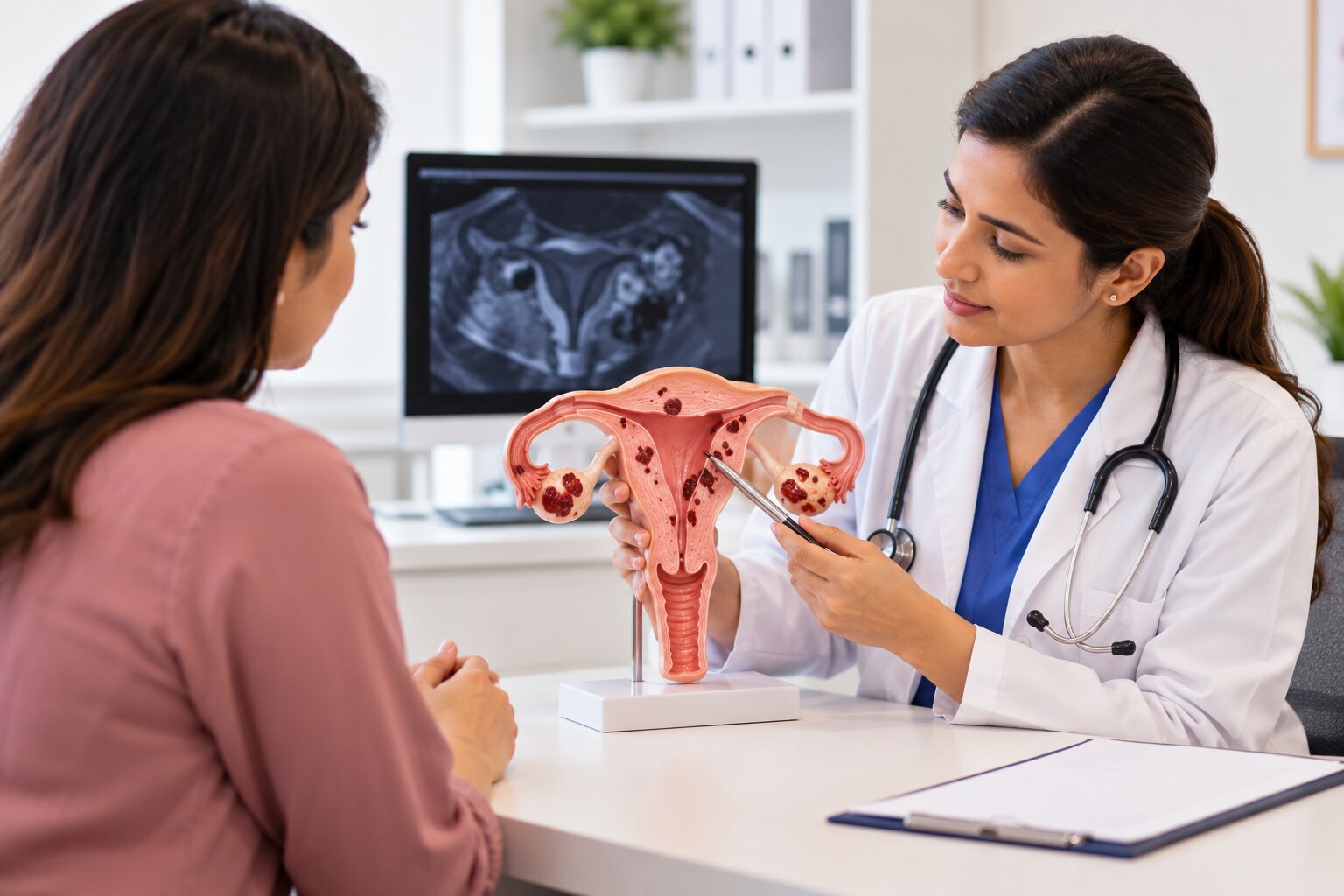
Pain that begins before bleeding, continues after a period, or appears with bowel movements, urination, or sex deserves more than automatic reassurance that it is ordinary cramping. You will learn how to recognise patterns that need assessment, prepare for a useful consultation, interpret scans without false certainty, and compare treatment choices against your pain, health, and fertility goals.
Key takeaways
- Painful periods alone do not confirm endometriosis; compare symptoms with other pelvic conditions.
- Bring a symptom diary, cycle dates, previous reports, medicines, and fertility goals.
- A normal scan does not always exclude endometriosis or explain persistent pelvic pain.
- Choose care that reviews pain relief, fertility plans, treatment risks, and follow-up.
Does your pain pattern fit endometriosis or another pelvic condition?
Endometriosis pain often starts before or during menstruation, continues after bleeding ends, and spreads to the lower back. It may worsen with bowel movements, urination, or sex, but symptoms overlap with many other conditions. Pelvic pain treatment in thane should investigate alternatives instead of assuming endometriosis from painful periods alone.
| Condition | Pattern that may point towards it |
|---|---|
| Ordinary menstrual cramps | Cramping starts around bleeding and usually improves within a few days. |
| Ovarian cyst | Sudden or one-sided pain, pressure, or pain after cyst rupture. |
| Fibroids | Heavy or prolonged bleeding, pelvic pressure, and cramping. |
| Adenomyosis | Heavy bleeding with deep, worsening menstrual pain and an enlarged tender uterus. |
| Pelvic inflammatory disease | Ongoing pelvic pain with fever, unusual discharge, or pain during sex. |
| Irritable bowel syndrome | Abdominal pain linked to bowel movements, diarrhoea, constipation, or bloating. |
| Urinary conditions | Burning, urgency, blood in urine, or pain related to bladder filling. |
| Pelvic-floor pain | Aching or tightness worsened by sitting, penetration, or examination. |
| Vulval or sexual-pain disorders | Burning, entry pain, skin sensitivity, or pain triggered by touch. |
A symptom pattern cannot confirm the cause. An examination and focused assessment with an endometriosis doctor in Thane can identify overlapping conditions.
Seek urgent assessment for sudden severe one-sided pain, fainting, fever, persistent vomiting, heavy bleeding, or pelvic pain with a positive pregnancy test. These signs require evaluation for emergencies such as ectopic pregnancy, not a routine appointment.
What should you bring to your first endometriosis appointment?
Bring records from the last two or three menstrual cycles, not just a general description of “bad periods.” An endometriosis doctor in Thane may ask for your cycle dates, when pain starts and ends, pain severity, bleeding amount and timing, bowel and bladder symptoms, sex-related pain, fatigue, medicines, contraception, pregnancy plans, previous scans, and operations.
Keep a symptom diary for two or three cycles. Include:
- A 0-to-10 pain score each day, including lower-back or pelvic pain
- Missed work, poor sleep, or reduced exercise
- Painful or difficult bowel movements and changes around menstruation
- Pain, urgency, or difficulty during urination
- Every medicine used, its dose, and whether it helped
Bring a written scan report plus the image files or films. Do not rely on a verbal summary: the clinician needs the original findings and images to decide whether further evaluation is appropriate. Bring operation notes or discharge papers if you have them.
The appointment may include a pregnancy test, a pelvic examination when appropriate, and review of prior reports. Tell the clinician if an examination could be difficult or painful. Also mention any sudden change in symptoms, heavy bleeding, fever, vomiting, fainting, or pain with possible pregnancy before a routine assessment.
What can scans and other tests show—and what can they miss?
No single test confirms or excludes endometriosis. Start with a transvaginal ultrasound, even when your pelvic examination is normal. It can identify endometriomas, suggest deep endometriosis, and reveal alternatives such as fibroids or ovarian cysts, but accuracy depends on lesion location and the operator’s experience. A normal scan does not automatically exclude superficial disease.
| Test | What it can show | What it can miss or cannot prove |
|---|---|---|
| Transvaginal ultrasound | Endometriomas, deep disease, and alternative pelvic causes | Superficial lesions; a normal result does not rule out endometriosis |
| Pelvic MRI | The extent and location of suspected deep disease; a map for complex surgery | Small or superficial disease; it is not a measure of pain |
| Blood tests | Pregnancy, infection, anaemia, or other explanations for symptoms | They do not prove endometriosis |
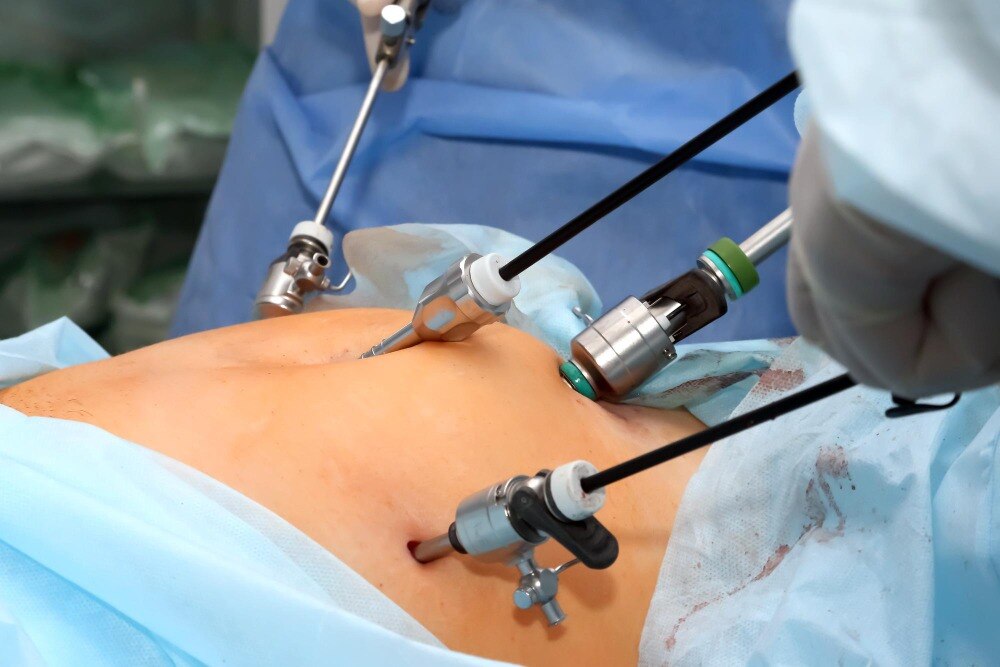
| Laparoscopy | Direct inspection and possible treatment of lesions | It is surgery, not an automatic first diagnostic step |
Pelvic MRI helps when deep disease is suspected or complex surgery needs planning. Laparoscopy becomes an option when imaging is negative or inconclusive and empirical treatment has failed, is unsuitable, or is not wanted.
Ask an endometriosis specialist in Thane:
- Was the scan performed and interpreted with endometriosis in mind?
- Was deep disease suspected?
- What does the report rule in or out?
- What is the next step if symptoms remain?
Imaging cannot measure pain severity. Discuss severe symptoms even when scan findings look limited.
Which treatment options fit your pain, health, and fertility plans?
Your fertility plans change the best endometriosis treatment in Thane: hormonal suppression may control pain, but it prevents conception while you use it. Choice also depends on bleeding preferences, medical conditions, side effects, and whether contraception is wanted.
| Option | Benefit | Trade-off |
|---|---|---|
| Combined hormonal contraception or progestogen | Suppresses endometriosis-related pain | Does not remove lesions; contraception is expected |
| Levonorgestrel-releasing intrauterine system or etonogestrel implant | Provides pain suppression with long-acting contraception | Both are contraceptives; irregular bleeding may occur initially |
| NSAID, such as ibuprofen or naproxen | Offers a short pain-relief trial | Does not remove lesions; review gastrointestinal, kidney, asthma, anticoagulant, and pregnancy risks first |
| GnRH agonist or antagonist | Can reduce pain when other treatment is unsuitable or ineffective | Generally second-line; hot flushes, vaginal dryness, mood symptoms, and bone loss can occur. Add-back therapy is used with many regimens |
| Surgery | Can help with an endometrioma, deep disease, organ involvement, or unacceptable pain | Adhesions can form, ovarian surgery can reduce ovarian reserve, and pain can recur |
Discuss pregnancy timing before hormonal treatment or ovarian surgery. If infertility is the main concern, ovarian-reserve testing, semen analysis, tubal-factor assessment, age-based planning, and fertility referral may matter more than repeated pain procedures.
Hysterectomy is not a guaranteed cure: it cannot remove endometriosis outside the uterus, and pelvic pain can persist. Choose surgery only after discussing its scope, fertility consequences, and alternatives.
How should you choose ongoing endometriosis care in Thane?
Choose ongoing care by the quality of decisions, not by whether one scan produces a label. An endometriosis doctor in Thane should review your symptom pattern and examination findings together. After a normal or inconclusive scan, they should explain what remains uncertain rather than dismiss persistent pain.
| Standard | What you should hear | Why it matters |
|---|---|---|
| Symptom-led review | Your pain pattern, bleeding, bowel and bladder symptoms, sexual pain, and examination findings are considered together | A scan cannot measure pain or exclude all disease |
| Scan discussion | The clinician explains what a normal or unclear result rules out, and what it cannot rule out | Superficial disease can remain invisible |
| Treatment choice | Medical and surgical options, benefits, risks, contraindications, and fertility effects are compared | The safest choice depends on your health and goals |
| Follow-up | The plan changes if pain persists, side effects develop, or pregnancy plans change | Repeating an unsuitable treatment wastes time |
For pelvic pain treatment in Thane, fertility-focused care may require ovarian-reserve assessment, semen analysis, tubal-factor evaluation, age-based planning, or referral to fertility services instead of repeated pain procedures. Discuss fertility goals before hormonal suppression or ovarian surgery.
A consultation with Dr. Mrs. Pradnya J. Gavali - Gynaecologist can provide a symptom-led review of painful periods or pelvic pain, prior reports, pregnancy intentions, and the next diagnostic or treatment decision. That makes the practice one local assessment option, not a reason to assume every patient needs the same test or treatment.
Related services
Pelvic Pain Treatment Pelvic pain can significantly affect a woman's daily life and may be caused by various gynaecological conditions, including endometriosis, ovarian... View service → |
Endometriosis Treatment Endometriosis is a common gynaecological condition in which tissue similar to the lining of the uterus grows outside the uterus, causing pelvic pain,... View service → |
Frequently asked questions
Does painful period pain always mean endometriosis?
No. Painful periods can overlap with adenomyosis, fibroids, pelvic infection, ovarian cysts, and other pelvic conditions. The pain pattern and examination guide further evaluation.
What should I bring to an endometriosis appointment?
Bring a symptom diary, menstrual dates, details of bowel or urinary symptoms, medicines, previous scan reports, surgery records, and your pregnancy plans.
Can scans miss endometriosis?
Yes. Ultrasound and MRI can identify some findings, including endometriomas and deep disease, but a normal result does not explain every case of pelvic pain.
How are endometriosis treatments chosen?
Treatment depends on pain severity, suspected disease, previous treatment, side effects, overall health, and whether you want to conceive now or later.
How can I choose ongoing endometriosis care in Thane?
Look for care that investigates alternative causes, explains test limits, discusses medical and surgical options, and schedules follow-up for changing symptoms and fertility needs.
Related services
Fibroids Treatment Uterine fibroids are non-cancerous growths that develop in or around the uterus and can cause heavy menstrual bleeding, pelvic pain, frequent... View service → |
Menstrual Disorders Management Menstrual Disorders Management Menstrual disorders can affect women of all ages and may include irregular periods, heavy menstrual bleeding, painful cramps, missed periods,... View service → |
Uterus Removal Surgery also known as a hysterectomy, is a surgical procedure recommended for women with conditions such as large fibroids, severe endometriosis, abnormal... View service → |
Menopause Care Treatment Menopause is a natural stage in a woman’s life marked by the end of menstrual cycles and significant hormonal changes that can lead to symptoms such... View service → |
Keywords