
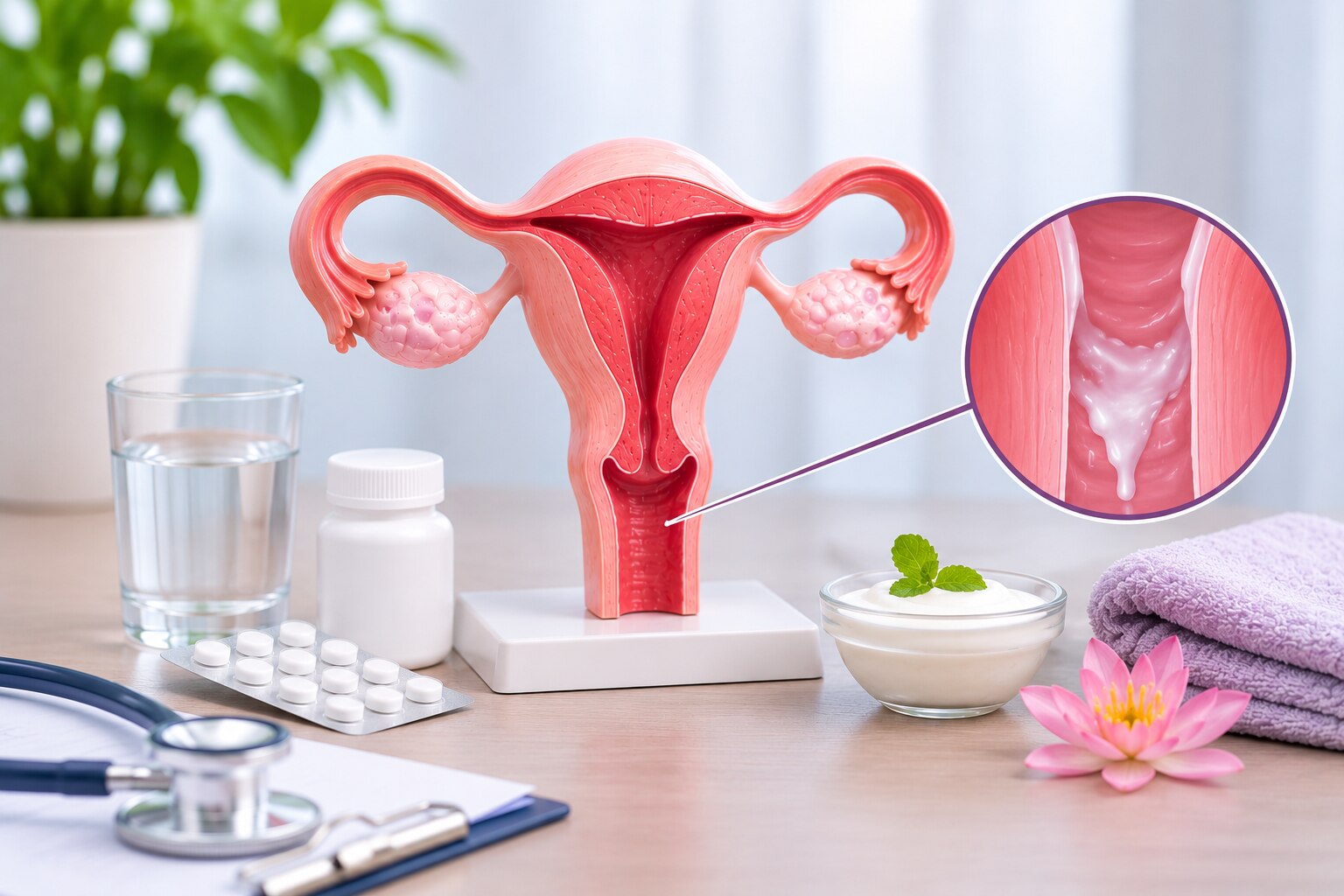
A discharge appointment usually begins with questions and a focused examination, not an automatic antifungal or antibiotic. By the end of the visit, you should know which tests can identify the cause, why a particular treatment was chosen, and when follow-up or urgent care is necessary.
Key takeaways
- Clear, odourless discharge without itching or pain can be normal.
- Bring your menstrual dates, pregnancy details and a list of medicines.
- Testing may include an examination, vaginal swab, urine test or pregnancy test.
- Seek urgent care for severe pain, fever, heavy bleeding or pregnancy complications.
What to expect when you book and prepare for the appointment
Book a white discharge checkup in Thane with a clinician who can take a detailed history before recommending medicine. Clear or white discharge without odour, itching or pain can be normal and may change with your menstrual cycle or pregnancy.
1. During booking, mention how long symptoms have lasted and whether they are worsening, recurring or linked to your cycle. At the appointment, describe the discharge’s colour, consistency, quantity and odour, plus itching, burning, vulval soreness, pelvic pain, pain during sex, bleeding, urinary burning or frequency, and fever.
2. Tell the clinician whether symptoms started after a new soap, vaginal product or sexual partner, and whether previous treatment helped. Also mention pregnancy possibility, diabetes, recent antibiotics, contraception and sexual exposure. These details help separate irritation, infection, urinary problems and sexually transmitted infections.
3. Before attending, do not douche or use scented vaginal products. Avoid vaginal creams unless a doctor prescribed them. Ask the clinic whether to avoid intercourse before sampling; avoiding sex for 24 hours helps when a swab or examination is likely.
4. Bring a medicines list or clear photographs, including recent antibiotics, allergies and contraception. Add previous test results and the dates and names of medicines used for earlier episodes.
Seek urgent assessment for fever, significant pelvic pain, vomiting, faintness, heavy bleeding, severe genital pain, pregnancy with concerning symptoms or rapidly worsening illness.
How the examination and tests identify the cause
After the history, the clinician decides whether examination is needed. It is not automatic for every mild, familiar symptom, but persistent, recurrent, strongly odorous discharge, pain, bleeding or an uncertain cause requires closer assessment.
1. The clinician inspects the vulva and nearby skin for redness, cracks, swelling, sores, dermatitis and visible discharge. This can reveal irritation or an external cause that does not require vaginal treatment.
2. When indicated, a speculum is inserted to view the vaginal walls and cervix and collect a swab. Ask the clinician to explain each step before it happens.
3. Vaginal pH separates acid-tolerant conditions from higher-pH conditions, but pH alone cannot identify the cause. A saline wet mount looks for clue cells, yeast forms and moving trichomonads; potassium hydroxide preparation and a whiff test help detect yeast elements or amine odour.
4. For bacterial vaginosis, three of four Amsel findings support diagnosis: homogeneous discharge, pH above 4.5, a positive whiff test and clue cells. Recurrent or treatment-resistant candidiasis may need a swab culture or PCR.
5. NAATs can test for selected infections, including chlamydia, gonorrhoea and trichomoniasis. Urine testing checks urinary causes, while pregnancy testing affects medicine choices.
Cervical screening is arranged when indicated; it is not a general discharge test. These steps make vaginal discharge treatment in Thane more precise than choosing medicine from discharge colour alone.
How the clinician separates infection from non-infectious causes
Clear or white discharge without odour, itching or pain can be physiological, changing with menstrual-cycle hormones or pregnancy. When the history and examination support this finding, treatment is unnecessary. An abnormal discharge doctor in Thane separates it from infection by checking symptoms, examining the vulva and cervix, and testing when the pattern is unclear.
- Candidiasis more often causes intense vulval itching, soreness, redness, and thick or curd-like discharge. Symptoms alone are not specific, so microscopy, culture or PCR helps when symptoms persist, recur, or fail to respond.
- Bacterial vaginosis more often causes thin, homogeneous discharge with a fishy odour and less intense itching.
- Trichomoniasis can cause malodorous yellow-green discharge, irritation or pain, but some people have no symptoms.
- Cervicitis becomes a concern when the cervix looks inflamed or bleeds easily, particularly with bleeding after sex or pelvic pain. NAATs may test for chlamydia and gonorrhoea.
- Urinary infection is considered when burning, urgency or frequency dominates and urine findings support it.
Symptoms without vaginal infection can result from dermatitis, irritation caused by soaps or creams, a retained foreign body, hormonal changes, or cervical causes. The clinician may assess these when infection tests are negative or treatment fails.
Recurrent candidiasis means three or more symptomatic episodes in under one year. It calls for culture or PCR rather than repeated single-dose treatment. Candida found without symptoms does not by itself require treatment.
How treatment is selected and when self-treatment is the wrong choice
Treatment is chosen from the cause, pregnancy status, allergies, current medicines, recurrence pattern and test results—not discharge colour alone. Vaginal infection treatment in Thane should match the diagnosis, because candidiasis, bacterial vaginosis, trichomoniasis, cervicitis and irritation can look alike.
| Condition | Selected treatment | Important limit |
|---|---|---|
| Candidiasis | Intravaginal azole; or fluconazole 150 mg orally once | Use oral fluconazole only for an appropriate non-pregnant patient. During pregnancy, use a topical azole for seven days and avoid single-dose oral fluconazole. |
| Bacterial vaginosis | Oral metronidazole for seven days; metronidazole vaginal gel for five days; or clindamycin cream for seven days | The choice depends on allergies, pregnancy considerations, medicines and local prescribing practice. |
| Trichomoniasis | Metronidazole 500 mg orally twice daily for seven days | Sexual partners need treatment. Avoid sex until treatment is complete and symptoms have resolved; women should be retested after about three months. |
Do not repeatedly use an over-the-counter antifungal, leftover antibiotic, douching product or home remedy. These can irritate tissue, obscure test results, cause side effects, promote resistance or delay care for cervicitis, urinary disease or a non-infectious cause. Recurrent candidiasis—three or more symptomatic episodes within one year—may need culture or PCR and a longer planned regimen.
A clinic that examines and tests can explain alternatives instead of guessing. Dr. Mrs. Pradnya J. Gavali - Gynaecologist can be considered for a Thane consultation that connects symptoms, results and a cause-specific plan.
Related service
White Discharge Treatment White discharge, also known as leucorrhea, is a common condition in women that can be normal or may indicate an underlying infection or hormonal... View service → |
What follow-up involves and when to seek urgent care
After the prescription, complete the white discharge treatment for process in Thane by following each instruction exactly.
- Finish the full course, even if symptoms improve early. Record changes in odour, itching, pain and discharge each day.
- Contact the clinician instead of repeating the same medicine if symptoms do not improve, return after treatment, or occur without typical infection signs.
- Ask whether you need a test-of-cure or repeat NAAT, especially after an STI diagnosis. Follow instructions for partner treatment, avoiding sex during treatment and retesting.
- Return for review if a swab or culture changes the initial diagnosis.
Persistent cervicitis does not automatically mean that you need more antibiotics. Reinfection, an untreated partner, irritants and non-infectious causes can require a different assessment.
Seek urgent medical assessment for any of these warning signs:
- Fever
- Significant lower-abdominal or pelvic pain
- Vomiting or faintness
- Heavy bleeding
- Severe genital pain
- Pregnancy with concerning symptoms
- Rapidly worsening symptoms
These findings can indicate pelvic inflammatory disease, a pregnancy-related complication or another problem that routine self-treatment cannot safely manage.
Frequently asked questions
What should I do before a white discharge checkup in Thane?
Record when the discharge began, its colour, odour and texture, plus itching, pain, bleeding, menstrual dates and pregnancy possibility. Bring your medication list and avoid self-starting treatment before the appointment.
How does a clinician identify the cause of vaginal discharge?
The clinician takes a detailed history and examines the vulva and vagina. Depending on your symptoms, they may recommend a vaginal swab, urine test, pregnancy test or other investigation.
How is infection separated from non-infectious discharge?
The clinician considers discharge features alongside itching, burning, pain, bleeding, menstrual timing, pregnancy, recent antibiotics, sexual exposure and examination findings. Tests help distinguish conditions such as bacterial vaginosis, candidiasis and sexually transmitted infections from normal hormonal discharge or irritation.
When is self-treatment for white discharge the wrong choice?
Avoid self-treatment when symptoms are new, recurrent, foul-smelling, associated with pelvic pain or bleeding, occur during pregnancy, or do not improve after treatment. The wrong medicine can delay diagnosis and worsen irritation.
When should I seek urgent care for vaginal discharge?
Seek urgent care for severe or one-sided pelvic pain, fever, fainting, heavy bleeding, vomiting, rapidly worsening symptoms, or discharge with pain during pregnancy.
Keywords