A shorter hospital stay does not automatically mean an easier operation. You need to understand how laparoscopy is performed, compare its recovery with vaginal and open surgery, and check whether it is safe for your diagnosis, fertility plans and general health.
Key takeaways
- Laparoscopy uses small abdominal openings under general anaesthesia.
- Recovery depends on the operation, not incision size alone.
- Ask about adhesions, previous surgery, medical conditions and conversion to open surgery.
- Confirm warning signs, medicines, wound care and follow-up before discharge.
What happens during a laparoscopic gynaecological operation?
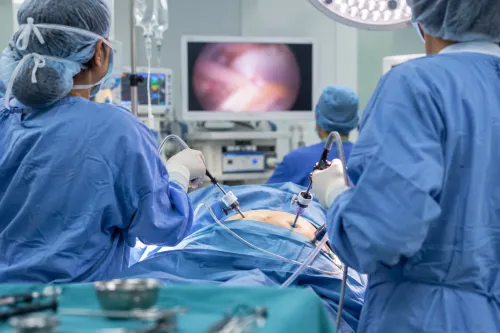
Under general anaesthesia, the surgeon operates through small abdominal openings rather than one large incision, so recovery involves both the anaesthetic and internal pelvic surgery. It is not a local-anaesthetic procedure with no recovery period.
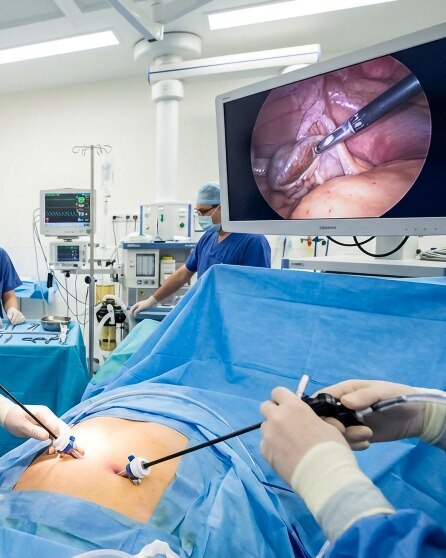
- The surgeon makes a small opening near the navel and inserts a laparoscope, a thin camera.
- Carbon dioxide inflates the abdomen, creating space between the abdominal wall and organs.
- Additional ports usually enter the lower abdomen. Through them, long instruments reach the pelvis while the surgeon watches a magnified monitor image.
- The surgeon cuts, seals blood vessels, sutures tissue or removes diseased tissue through these ports, then closes the skin incisions.
This route may be used for ovarian cystectomy, ectopic pregnancy treatment, endometriosis excision or ablation, myomectomy, adhesiolysis, tubal surgery and selected hysterectomies. The number and position of incisions depend on the operation, your anatomy and previous abdominal surgery.
The smaller wounds explain some laparoscopic surgery benefits, but they do not make pelvic surgery minor. Internal healing still takes time. Minimally invasive gynaecology in Thane uses the same basic technique: camera-guided treatment through ports, followed by observation for bleeding, pain, nausea and other effects of surgery and general anaesthesia.
How much faster is recovery than with open or vaginal surgery?
Laparoscopy often shortens recovery by days rather than weeks compared with open abdominal surgery. Smaller wounds usually mean less wound care, lower pain-control needs, earlier walking and fewer hospital days. Diagnostic and minor operative procedures often allow discharge the same day or next day.
Extensive endometriosis surgery, complex hysterectomy and cancer surgery require longer admission and recovery.
| Option | Hospital stay and recovery | Best comparison |
|---|---|---|
| Laparoscopic hysterectomy | Usually shorter stay, less wound care and earlier return to routine activity than abdominal hysterectomy; recovery still depends on the operation | Useful when the surgeon can safely remove the uterus through ports |
| Abdominal hysterectomy | Larger incision, more pain-control needs and slower walking and activity recovery | Used when disease, anatomy or safety requires open access |
| Vaginal hysterectomy | Can provide equal or better recovery than laparoscopy when technically suitable | Often preferable for suitable benign conditions |
During the first 24 hours, expect grogginess, abdominal soreness, mild nausea and assisted walking. Shoulder-tip pain for a few days comes from residual carbon dioxide irritating the diaphragm, not an injured shoulder. In the first week, fatigue, bruising and pulling around the ports are common; pain should trend downward.
The laparoscopy recovery benefits vary by procedure and health. Driving, work, exercise and sexual activity depend on medication use, wound healing and surgical clearance. These laparoscopic surgery benefits are advantages, not guarantees; compare the benefits of laparoscopic gynaecology in Thane with vaginal and open alternatives for your specific operation.
What can make recovery slower, or make laparoscopy risky?
Faster recovery is not guaranteed. Extensive endometriosis, large fibroids, dense adhesions, obesity, anaemia and other medical conditions can lengthen the operation and increase pain or fatigue. The usual laparoscopic surgery benefits—smaller wounds, less wound care and earlier mobility—depend on the procedure and your health.
Laparoscopy still carries risks, including bleeding, infection, anaesthetic complications, blood clots, port-site hernia and injury to the bowel, bladder, ureter or major blood vessels. Carbon dioxide can cause temporary shoulder-tip pain. Worsening symptoms need urgent medical advice:
- Increasing abdominal pain
- Fever or repeated vomiting
- Heavy vaginal bleeding
- Breathlessness or fainting
- A red, swollen or draining wound
Poor visibility, uncontrolled bleeding, dense adhesions, unexpected disease or organ injury can make conversion to open surgery safer. Conversion is a safety decision, not automatically a failed operation. A small skin incision does not make pelvic surgery minor; extensive internal treatment can still require substantial recovery.
| Option | What it means | Recovery implication |
|---|---|---|
| Laparoscopy | Treatment through small ports | The laparoscopy recovery benefits are most likely after straightforward procedures |
| Open surgery | A larger abdominal incision | More wound care, pain control and mobility restrictions |
| Converted surgery | Laparoscopy changed to an open operation | Recovery follows the larger operation and its internal work |
If your operation involves extensive disease or complications, expect recovery to reflect what was treated, not the size of the original wounds.
How do you know whether laparoscopy is the right route for you?
The right route depends on your diagnosis, examination, ultrasound or other imaging, previous abdominal operations, suspected adhesions, pregnancy status, fertility plans and overall health—not on incision size alone. Ask whether medication, hysteroscopy, vaginal surgery or open surgery would provide better safety or more complete disease clearance.
| Route | What the surgeon weighs | When it may fit |
|---|---|---|
| Medication | Symptoms, diagnosis and fertility plans | When surgery is unnecessary or can be deferred |
| Hysteroscopy | A problem inside the uterine cavity | Polyps, some fibroids or abnormal bleeding |
| Laparoscopy | Pelvic anatomy, adhesions and operative complexity | Selected ovarian, tubal, endometriosis or uterine procedures |
| Vaginal surgery | Uterine mobility and pelvic anatomy | Hysterectomy when access is technically suitable |
| Open surgery | Disease extent, bleeding risk and visibility | A very large mass, advanced disease or complex reconstruction |
Laparoscopy may be unsuitable if you are unstable from internal bleeding, have severe adhesions, a very large mass, advanced disease, or a condition that makes general anaesthesia or carbon-dioxide pneumoperitoneum unsafe. Suspected cancer needs an oncologically appropriate plan based on the diagnosis, not routine minimally invasive gynaecology in Thane simply because the cuts are smaller.
For endometriosis, discuss lesion location and extent, pain, previous treatment, fertility goals and whether advanced or multidisciplinary care is needed. The benefits of laparoscopic gynaecology in Thane apply only when the route suits your case.
A consultation with Dr. Mrs. Pradnya J. Gavali - Gynaecologist in Thane can help you compare those options with the proposed laparoscopic gynaecologist in Thane plan.
Related service
Laparoscopic Gynaecologist Laparoscopic gynaecology is a modern minimally invasive surgical approach used to diagnose and treat various gynaecological conditions with small... View service → |
What should you confirm before surgery and after discharge?
Before booking, turn the possible laparoscopy recovery benefits into a written safety plan. Location alone does not establish quality; experience with your operation, emergency capability and dependable follow-up matter more.
1. Ask the laparoscopic gynaecologist in Thane how often they perform your specific operation. Ask what findings could require conversion to open surgery, how bleeding or bowel, bladder and ureter injuries would be managed, and whether the facility can provide urgent specialist support.
2. Confirm the expected hospital stay, prescribed pain medicines, wound-care instructions, lifting limits and follow-up date. Get exact clearance points for driving, work, exercise and sex rather than relying on the word “laparoscopy.”
3. Follow every fasting, medication and blood-test instruction. Arrange transport and an adult to stay with you for the first night after general anaesthesia; do not drive yourself home.
4. Match the restrictions to the procedure. Diagnostic laparoscopy, ovarian cystectomy, ectopic-pregnancy surgery, endometriosis excision and hysterectomy involve different internal healing and recovery demands. Ask which advice applies to your operation, including minimally invasive gynaecology in Thane protocols.
5. Before leaving, save the contact number for urgent advice and ask where to go after hours. Seek prompt help for fever, worsening pain, heavy bleeding, inability to urinate, chest pain, breathlessness, calf swelling or persistent vomiting.
A clear written plan makes recovery safer than assumptions about minimally invasive surgery.
Frequently asked questions
What happens during a laparoscopic gynaecological operation?
Under general anaesthesia, the surgeon makes small abdominal openings, inserts a camera and instruments, and performs the pelvic operation. You still need recovery time for anaesthesia and internal healing.
How much faster is recovery than with open or vaginal surgery?
Laparoscopy often causes less abdominal wound pain and supports an earlier return to normal activity than open surgery, but recovery varies by procedure, findings and complications. Vaginal surgery can have a similar or faster recovery for suitable operations.
What can make recovery slower, or make laparoscopy risky?
Extensive adhesions, previous abdominal surgery, obesity, anaemia, medical conditions, a complex procedure or complications can slow recovery. The surgeon may need to convert to an open operation if laparoscopy is unsafe.
How do you know whether laparoscopy is the right route for you?
Discuss the diagnosis, planned procedure, alternatives, anaesthesia risks, expected recovery and the chance of conversion to open surgery. Your examination, medical history, imaging and surgical findings guide the choice.
What should you confirm before surgery and after discharge?
Before surgery, confirm fasting instructions, medicines to stop or continue, tests, transport and the planned procedure. After discharge, confirm wound care, activity limits, pain medicines, follow-up and urgent warning signs such as heavy bleeding, fever, worsening pain, breathlessness or repeated vomiting.
Keywords