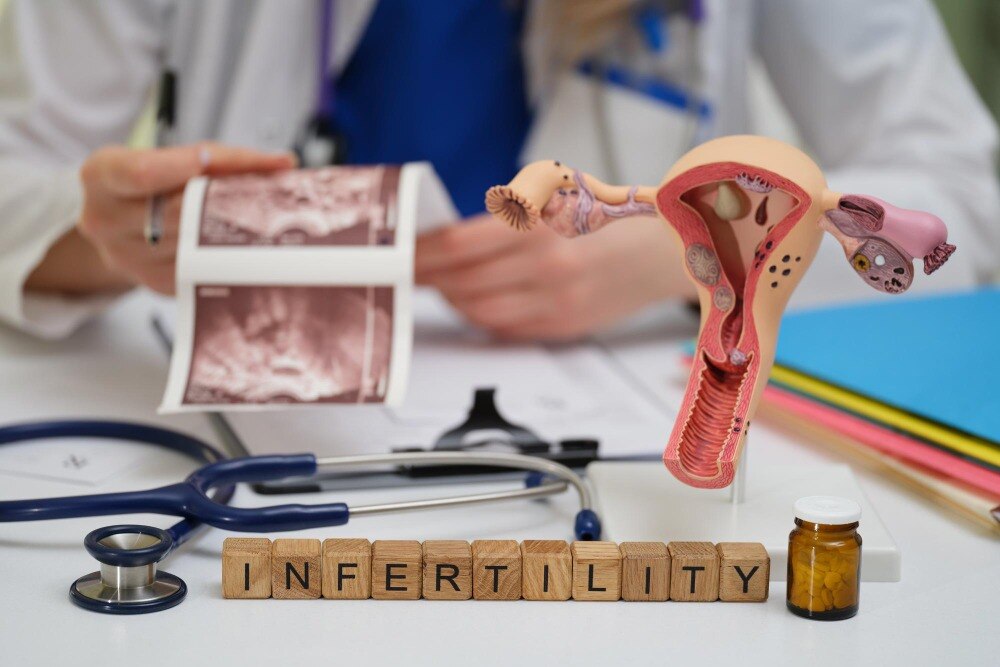
You may be unsure what to bring, which tests come first, or how doctors decide between medicines, insemination and IVF. By the end, you will know how to prepare for the first appointment, follow each treatment stage and recognise the follow-up care that comes after a pregnancy test.
Key takeaways
- Bring both partners’ medical histories and plan to attend together.
- Do not start treatment from one AMH result or semen report.
- Expect assessment before your doctor recommends a treatment cycle.
- Pregnancy testing determines follow-up care and the next treatment decision.
Before the first appointment: what to prepare and bring
Before booking an infertility treatment consultation in Thane, gather both partners’ medical history and plan for both to attend. The infertility treatment process begins with assessment, not an automatic prescription, so do not start treatment because of one isolated AMH result or one abnormal semen report.
- Record the first day of each menstrual period for the past six months, cycle length, bleeding changes and ovulation symptoms.
- Bring previous pregnancy records, miscarriage or abortion reports, ultrasound scans, hormone tests, semen-analysis reports and treatment prescriptions.
- Collect operation notes for pelvic or testicular surgery, and records of pelvic infections, endometriosis or other relevant diagnoses.
- Write every medication, supplement and allergy, including dose and how long it has been used. Add important medical conditions, family history, smoking or alcohol use and fertility concerns.
- Note sexual frequency, pain, erection or ejaculation difficulties, and how long you have been trying to conceive. Prepare questions about tests, treatment choices, risks, costs and follow-up.
Ask the clinic whether both partners need to attend, whether either person should arrive with a full bladder for an ultrasound, and which records need original copies. The clinician may recommend examination, ultrasound or semen testing after reviewing your history; bringing clear reports can prevent unnecessary repetition.
A semen result is not a final verdict because concentration, movement and morphology vary between samples.
What happens during the first consultation for both partners
The first visit assesses both partners and sets out what happens during infertility treatment, rather than starting medication immediately. The clinician reviews how long you have been trying, your priorities, and any previous investigations or treatment.
The history covers:
- Menstrual dates, cycle length and signs of ovulation
- Previous pregnancies, miscarriages, deliveries and complications
- Pelvic infections, endometriosis, surgery and other medical conditions
- Sexual frequency, pain or erection and ejaculation difficulties
- Medicines, supplements, smoking, alcohol, weight changes and family history
The male partner usually needs a semen analysis measuring sperm concentration, movement and shape. One abnormal report is not a final diagnosis; the clinician may repeat it, especially after a markedly abnormal result, and arrange male-reproductive assessment if the finding persists.
The examination depends on the history. It may include blood-pressure and general checks, a pelvic examination, and transvaginal ultrasound to assess the uterus, ovaries, cysts or fibroids. Bring prior scans and reports so unnecessary repeat testing is avoided.
You will discuss the likely next tests, including tubal-patency testing when appropriate, plus treatment choices, costs, risks and alternatives. Options may include timed intercourse, ovulation-induction medicine, surgery for a selected problem, IUI or IVF.
The plan should reflect age, ovarian reserve, semen findings, infertility duration and your preferences—not an isolated AMH result or one semen report.
Which tests come first and what the results mean
The first investigations usually cover ovulation, sperm, ovarian response and the reproductive anatomy. Timing matters: a result taken on the wrong cycle day can mislead the infertility treatment process.
| Test | When it is performed | What the result means |
|---|---|---|
| Semen analysis | After 2–7 days without ejaculation; repeat an abnormal result | Measures sperm count, movement and shape; persistent abnormalities may point to male-factor infertility |
| Pelvic ultrasound with antral-follicle count | Early in the menstrual cycle, often days 2–5 | Checks the uterus, ovaries, fibroids, cysts and visible follicle number |
| AMH blood test | Any cycle day | Helps estimate ovarian response to stimulation, but does not reliably predict natural conception |
| Ovulation assessment, including progesterone | About seven days before the expected period | Supports whether ovulation occurred; the correct date depends on cycle length |
| Tubal patency test, such as HSG or HyCoSy | After bleeding ends and before ovulation | Shows whether the fallopian tubes are open and identifies some uterine-cavity problems |
Doctors add thyroid-stimulating hormone, prolactin or other hormone tests when the history, examination or cycle pattern gives a reason. A low AMH does not prove pregnancy is impossible, and one abnormal semen report does not establish permanent infertility; repeat testing and the full couple’s history matter.
These findings shape the next fertility treatment steps. Open tubes, confirmed ovulation and suitable sperm may support timed intercourse or ovulation induction, while blocked tubes, severe sperm abnormalities or reduced ovarian response can change the discussion toward surgery, IUI or IVF.
How doctors choose and run the treatment cycle
Doctors choose treatment by diagnosis, age, ovarian reserve, infertility duration, semen findings, tubal status and your preferences. Two blocked tubes usually make IVF more suitable than ovulation induction or IUI. Unexplained infertility often follows a planned sequence instead of moving straight to IVF.
| Option | What happens | When it applies |
|---|---|---|
| Timed intercourse | You have sex during the fertile window identified by ovulation tracking | Ovulation and at least one open tube are present |
| Ovulation induction | Medication helps an egg develop or ovulate, with intercourse planned around ovulation | Ovulation is irregular or absent |
| IUI | Prepared sperm is placed inside the uterus around ovulation | At least one tube is open and semen findings support treatment |
| IVF | Eggs are collected, fertilised in a laboratory and transferred as an embryo | Tubal blockage, significant male-factor infertility, reduced ovarian reserve or unsuccessful simpler treatment |
What to expect from infertility treatment depends on the chosen plan. A monitored cycle uses ultrasound scans and sometimes blood tests to track follicle growth and the uterine lining.
- Take the prescribed medication; the clinic may change the dose if response is too weak or too strong.
- Receive a trigger injection when a follicle is ready, followed by timed intercourse, IUI or egg retrieval.
- For IVF, undergo egg retrieval under sedation or anaesthesia, laboratory fertilisation, embryo culture and fresh transfer or freezing.
- Contact the clinic urgently for severe abdominal swelling, vomiting, reduced urine or breathing difficulty, which can indicate ovarian hyperstimulation syndrome.
These fertility treatment steps are adjusted or cancelled if the ovaries respond unsafely.
Pregnancy testing, follow-up and the next decision
After the cycle, wait for the clinic’s specified test date rather than testing immediately after intercourse, insemination or embryo transfer. The usual test is a blood beta-hCG measurement; a positive result starts early pregnancy monitoring, while a negative result leads to a review rather than an automatic repeat.
1. Take the pregnancy test on the instructed date. Home urine tests can be affected by testing too early or by residual trigger medication, so report the result and test type to the clinic.
2. If positive, continue prescribed medication until the clinician advises otherwise. An early ultrasound, commonly around 5½ to 6½ weeks of pregnancy, checks that the pregnancy is inside the uterus and developing.
3. Seek urgent advice for heavy bleeding, severe or one-sided pain, fainting, fever or breathlessness. These symptoms need prompt assessment for ectopic pregnancy, miscarriage or ovarian-stimulation complications.
4. If negative, ask what the cycle showed: ovulation response, uterine lining, sperm performance, number of eggs retrieved or embryos available. The next choice may be another monitored cycle, a changed dose or protocol, IUI, frozen-embryo transfer, surgery or IVF.
What to expect from infertility treatment includes a decision review, not simply “try again.” At an infertility treatment consultation in Thane, Dr. Mrs. Pradnya J. Gavali - Gynaecologist can use your cycle records and test results to avoid unnecessary repeat investigations.
The follow-up review shows what happens during infertility treatment when a cycle succeeds or fails.
Related service
Infertility Treatment Infertility is a condition where a couple is unable to conceive after one year of regular, unprotected intercourse and may be caused by hormonal... View service → |
Frequently asked questions
What should you bring to an infertility treatment consultation?
Bring both partners’ medical histories, previous fertility reports, medication details, and records of prior pregnancies or treatments. Both partners should attend when possible.
What happens during the first infertility consultation?
The doctor reviews both partners’ health and fertility history, discusses timing and goals, performs an appropriate examination, and recommends initial tests.
Which infertility tests are done first?
Doctors commonly begin with a semen analysis for the male partner and an assessment of ovulation, ovarian reserve, the uterus, and fallopian tubes for the female partner. Results must be interpreted alongside the medical history.
How is an infertility treatment cycle chosen?
The doctor considers the cause of infertility, age, test results, previous treatment, duration of trying, and both partners’ preferences before selecting and explaining a treatment cycle.
What happens after pregnancy testing?
The clinic confirms the result and arranges follow-up. A positive result leads to early pregnancy care, while a negative result prompts review of the cycle and discussion of the next option.
Keywords